The Future Speaks Irish!
Why Ireland’s new confidence in its own language has unsettled the establishment

When The Sunday Times columnist Alison O’Connor warned that the rise of the Irish language might be “creating a them-and-us situation,” she revealed less about the language than about the anxieties of Ireland’s establishment commentariat.
Her piece on 1st November - “Spare a thought for those who don’t talk the (Irish) talk,” dressed insecurity up as cultural insight - suggesting that the renewed enthusiasm for Irish, visible in music, politics and everyday speech, risked becoming divisive or even “Talibanised.”
It was written in the familiar tone of middle-class condescension - the sigh that greets any expression of Irishness too confident for comfort or outside elite control.
The Fear of the Living Language
O’Connor’s argument inverted reality. Cultural confidence was recast as aggression and inclusion as exclusion.
What her piece really betrayed was unease - the discomfort of a professional class long used to policing the boundaries of “acceptable” Irishness.
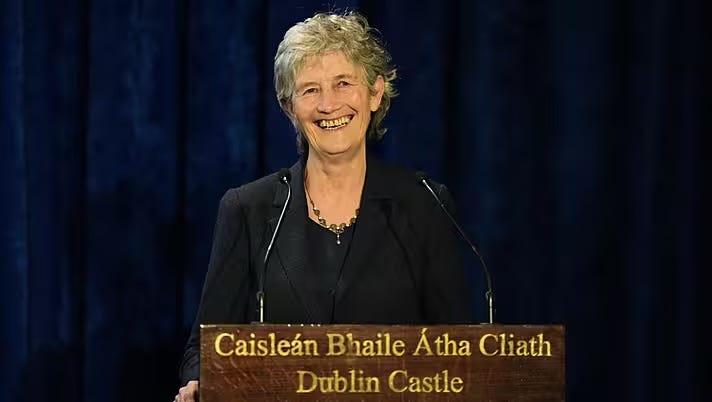
When Catherine Connolly began her election victory speech in Irish and continued in it, O’Connor admitted admiration for her fluency but could not resist wondering aloud how the English-only establishment figures beside her must have felt. The implication was that Connolly’s Irish was somehow impolite - as if speaking one’s own national language at the inauguration of an Irish President required apology.
That mindset - the instinct to pathologise authenticity - is the hangover of a post-colonial elite that still measures respectability by distance from our own culture.
Connolly’s Irish vs O’Connor’s Ireland
Against O’Connor’s weary negativity stood the positivity of Catherine Connolly’s campaign itself.
In Galway, Derry, Belfast and Dublin, young people were drawn not by nostalgia but by energy - by the sound of Irish spoken naturally, without affectation or apology. Connolly’s language was the opposite of exclusionary - it was generous and welcoming. It spoke to an Ireland that could be confident without arrogance, rooted without being reactionary.
The mood around her campaign was joyful - a presidential campaign where the Irish language was not just a ceremonial flourish but a living voice of civic pride. Far from creating “them and us,” it created a we that stretched across borders, classes and generations.
The Rebirth of a Living Language
That spirit didn’t emerge from nowhere.
The Irish language revival of today was not designed in government departments; it was built from below. It began in Pop Up Gaeltachtí, podcasts, community cafés and hip-hop. The state tolerated the language - people revived it. From Gaelcholáistí to pop culture, Irish slipped the leash of officialdom and went viral in the best sense.
But the real roots of this resurgence lie in the North, where the modern Irish-language movement was reborn amid struggle.
In the 1980s and 1990s, republican ex-prisoners returning from Long Kesh and Armagh carried home more than political experience. They brought with them a language they had learned and shared while incarcerated - an act of resistance and self-respect in places designed to erase both.
They founded schools, cultural centres and community networks that treated Irish not as a school subject but as a language of liberation.
In West Belfast and Derry, Irish became the cultural expression of a people determined to rebuild dignity on their own terms. That grassroots energy - born of struggle and imagination - fuelled the wider national renaissance we see today.
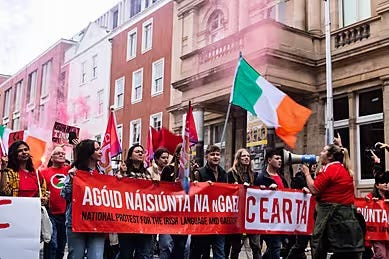
That same current of activism surged again this autumn, when tens of thousands filled the streets of Dublin for the CEARTA march - the largest demonstration for the Irish language and the Gaeltacht in a generation. At its heart stood An Dream Dearg, the movement that began in Belfast and has grown into an all-island force for equality and respect. Their banners - Dearg le Fearg - once a rallying cry of resistance in the North, have become a unifying symbol of renewal across the island.
On that September day, their chants rolled from Parnell Square to the Dáil gates, demanding not tokenism but rights - in education, signage, broadcasting, and public life. It was the living proof that the Irish-language revival is not some boutique subculture, but a people’s movement - confident, intergenerational and unstoppable.
And increasingly, that movement speaks with many accents. In East Belfast, Linda Ervine and the Turas project have shown that Irish belongs to no one tradition alone. Irish classes in traditionally unionist areas are oversubscribed, filled with people discovering that the language of the island is part of their story too. Their curiosity reconnects with an older thread - the Protestant scholars and poets of earlier centuries, from William Neilson to Douglas Hyde, who laboured to preserve the language. The revival today, north and south, echoes that inclusive spirit - Irish as a shared inheritance.
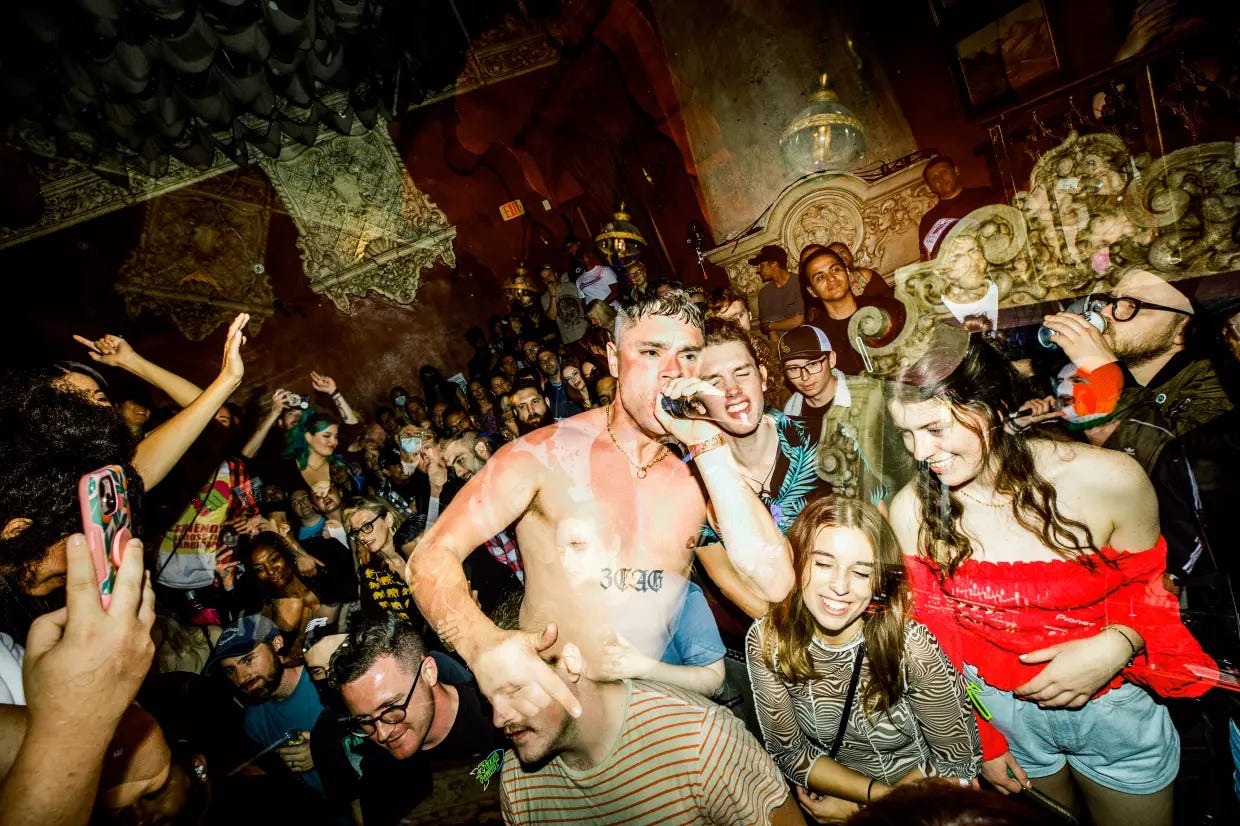
Kneecap’s Irish is confident, streetwise and irreverent. They took the language out of the classroom and back into the bloodstream. They didn’t teach it - they lived it. And in doing so, they made Irish sound like the future, not the past.
The Real Divide: Authentic vs Imported Irishness
All of which exposes the absurdity of the far-right’s newfound “Irishness.”
The loudest self-styled ‘patriots’ in Ireland today are also the least authentically Irish. Their social media posts, vocabulary and grievances are imported wholesale from the Anglo-American far right. They sneer at the Irish language even as they wrap themselves in the flag, their rhetoric a noisy imitation of foreign culture wars.
Their Irishness is not lived - it is performed - and in English at that.
The left, by contrast, and the progressive movement that surrounds it, has been the true custodian of Irish authenticity. From Catherine Connolly’s election campaign to classrooms in West Belfast, it is progressives who have made the language modern again - democratic, pluralist, open.
The far right’s version of Irish identity is narrow, fearful and essentially foreign. The left’s version is generous, confident and rooted.
A Country at Ease with Itself
For the first time in modern Ireland, the language feels owned by the people rather than by institutions. Its new life - from Kneecap’s popularity to Catherine Connolly’s election victory speech - signals something deeper than trend or fashion. It marks the emergence of a country beginning, tentatively, to feel at ease with itself.
Alison O’Connor wrote of a supposed “chasm” between Irish speakers and others. In reality, the only chasm is between those who see Ireland as a living, evolving culture - and those who prefer it frozen in the polite, Anglicised image of a post-colonial middle class that never quite forgave the people for keeping our language and culture alive.
The Irish language is not theirs to pity or police. It belongs to the future.
And the future, finally, is speaking Irish.
Go mairfidh an scéal seo i bhfad!
This article has reignited a fire in me to immerse myself in our beautiful language once again. Last year, I decided to get to grips with the language. I studied books, listened, went to a ciorcal comhrá, and spoke regularly. But then life became overly busy and there were other things I had to prioritise. However, now I have the time and headspace. I think to myself - what a shame it would be to live this life without learning my native tongue. On another note, I recommend you check out the Munster rapper Súil Amháin. Go raibh maith agat!
Love the line "... Irish not as a school subject but as a language of liberation."
My plan is to start tentative steps at reschooling myself in our native tongue.